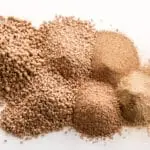
What is Bentonite? Uses, Properties & Industrial Applications
Bentonite is a naturally occurring clay mineral with outstanding swelling, absorbent, and binding qualities. It forms mainly from volcanic ash and plays a critical role in many industries, including oil and gas drilling, construction, agriculture, cosmetics, and water treatment. Thanks to its flexibility, availability, and low cost, bentonite is widely used in both its raw and processed forms.
In this blog, we’ll explore what bentonite is, its types and properties, how it’s used across various industries, important safety tips, and why sourcing it from trusted suppliers like Pars Universal Bitumen ensures reliable performance.
✅ What is Bentonite?
Bentonite is an aluminum phyllosilicate clay made mostly of montmorillonite. It may also contain small amounts of minerals like quartz, feldspar, calcite, and mica. Its chemical structure allows it to absorb water and expand, forming a gel-like consistency. As a result, it’s ideal for sealing, thickening, and filtering in many industrial processes.
📦 Types of Bentonite
Bentonite is categorized based on the dominant exchangeable cation it contains. The three main types include:
1. Sodium Bentonite
This is the most absorbent type and can swell up to 15 times its dry volume. It’s widely used in:
Drilling fluids
Waterproofing systems
Sealants and pond liners
Foundry sand molds
Because of its high swelling capacity, sodium bentonite is perfect when water absorption is essential.
2. Calcium Bentonite
This type absorbs less water than sodium bentonite. It’s commonly used in:
Skincare and beauty products
Pharmaceuticals
Animal feed
Clarifying liquids (e.g., wine and juice)
Often known as Fuller’s Earth, calcium bentonite is ideal for detoxification and moisture control.
3. Potassium Bentonite
This is a less common form, but it’s useful in:
Ceramics
Specialized applications like wine clarification
Although rare, potassium bentonite offers unique properties for niche industrial uses.
⚙️ Physical & Chemical Properties
| Property | Value/Description |
|---|---|
| Chemical Formula | Al₂H₂O₁₂Si₄ (Montmorillonite) |
| Appearance | Fine gray or cream-colored powder |
| pH (10% slurry) | 8.5 – 10.5 |
| Swelling Capacity | Up to 15x (sodium type) |
| Cation Exchange Capacity | 70–100 meq/100g |
| Moisture Content | 8–12% |
| Solubility | Insoluble, but forms gels in water |
These properties vary slightly depending on the type and grade of bentonite.
🏭 Major Industrial Applications of Bentonite
1. Drilling & Oilfield Operations
Engineers frequently use bentonite as a viscosifier and filtration control agent in drilling fluids. It:
Maintains wellbore stability
Lubricates and cools drill bits
Suspends and carries cuttings to the surface
Prevents blowouts by forming a sealing filter cake
Additionally, its gel-like suspension increases fluid viscosity, improving hole cleaning and reducing fluid loss.
2. Construction & Civil Engineering
In construction, bentonite is used to build slurry walls and waterproof barriers. Contractors mix it with water to form a thick slurry that:
Blocks groundwater seepage
Seals landfills and tunnels
Forms part of geosynthetic clay liners (GCLs)
Moreover, it offers long-term impermeability for foundation and underground projects.
3. Foundry & Metallurgy
Foundries rely on bentonite as a binder for sand molds during metal casting. It:
Improves mold strength
Allows sand reuse
Resists high temperatures
As a result, it’s essential for producing clean and accurate castings.
4. Agriculture
Farmers use bentonite to:
Enhance soil structure and water retention
Bind animal feed pellets
Absorb toxins (mycotoxins)
For example, it helps sandy soils retain water and nutrients, promoting healthier crop growth.
5. Cosmetics & Personal Care
Skincare brands often include calcium bentonite in:
Face masks and cleansers
Toothpaste and deodorants
Its ability to absorb oil and remove impurities makes it a go-to ingredient for detox and acne-control products.
6. Pharmaceutical & Food Industry
It is also used in:
Antacid tablets
Detox supplements
Wine and juice clarification
Anti-caking agents in food
Its fine particle size and absorbent nature make it safe and effective in regulated quantities.
7. Water & Waste Treatment
Bentonite removes:
Heavy metals
Toxins and suspended solids
Excess nutrients and organic pollutants
In addition, it stabilizes pH levels in water treatment systems and helps purify industrial effluents.
✅ Benefits of Using Bentonite
🌍 Eco-Friendly: Naturally occurring and biodegradable
💲 Affordable: Cost-effective for bulk use
💧 High Absorption: Excellent for moisture control and impurity removal
🏗️ Versatile: Suitable across many industries
🧪 Stable: Chemically inert and long-lasting
⚠️ Safety & Handling Tips
While it is generally safe, you should follow standard safety practices:
Wear a mask and goggles when handling powder
Keep it in a dry, sealed container
Avoid mixing with acids or bases
Work in well-ventilated spaces
Proper handling ensures product stability and personal safety.
📈 Why Choose Bentonite from Pars Universal Bitumen?
At Pars Universal Bitumen, we offer premium bentonite tailored to your exact needs. Here’s why our clients trust us:
🔬 High Purity: Verified sodium and calcium bentonite
🚛 Global Shipping: Fast and reliable worldwide delivery
📦 Custom Packaging: Bags, jumbo sacks, or bulk supply
🧑🔬 Expert Guidance: Help with application and compliance
💰 Flexible Pricing: Competitive rates and volume discounts
Whether you need bentonite for drilling, cosmetics, or agriculture, we’ve got you covered.
❓ FAQs About What is Bentonite
1. What makes bentonite swell in water?
Its montmorillonite structure allows water to enter between layers, causing it to expand—especially in sodium bentonite.
2. Is bentonite safe for human use?
Yes. Food and pharma-grade calcium bentonite is approved for consumption and skin use.
3. How long can bentonite be stored?
Indefinitely, if kept in a dry, sealed container away from contaminants.
4. Is bentonite the same as kaolin clay?
No. Bentonite swells more and absorbs better, while kaolin is milder and used more in ceramics and gentle skincare.
5. What packaging options are available?
We supply 25 kg bags, jumbo sacks, or custom bulk containers based on your project needs.
🏁 Conclusion
Bentonite is a versatile and powerful natural clay used in everything from oil drilling to skincare. Its swelling, binding, and purifying properties make it essential across industries. But its effectiveness depends heavily on the quality and source.
Choose Pars Universal Bitumen for premium-grade bentonite, expert advice, and reliable service every step of the way.
📞 Contact Pars Universal Bitumen Today!
Looking for a trusted supplier of high-quality Bentonite?
📧 Email: [email protected]
📞 Phone: +971 4 878 2031
🌐 Visit: Pub-ltd
👉 Request a Free Quote Today – Fast Delivery, Global Reach, Trusted Quality! If you have any further questions, don’t hesitate to contact us.